Read & Listen Bundle
Ebook + Audiobook together · Save 17%
$4.99 USD $5.98 USD
Best value: switch between browser reading and chaptered audiobook listening in one KamerBooks library.

Fiction
by Marcus Andrew Hislop Clarke
Ebook + Audiobook together · Save 17%
Best value: switch between browser reading and chaptered audiobook listening in one KamerBooks library.
Instant delivery & trusted checkout: Pay with MTN Mobile Money or Orange Money (XAF), or PayPal & Card (USD). Every paid digital edition is backed by our 7-day satisfaction guarantee.
Displayed prices in USD are estimates when converted. Checkout shows the exact charge amount and currency before you pay.
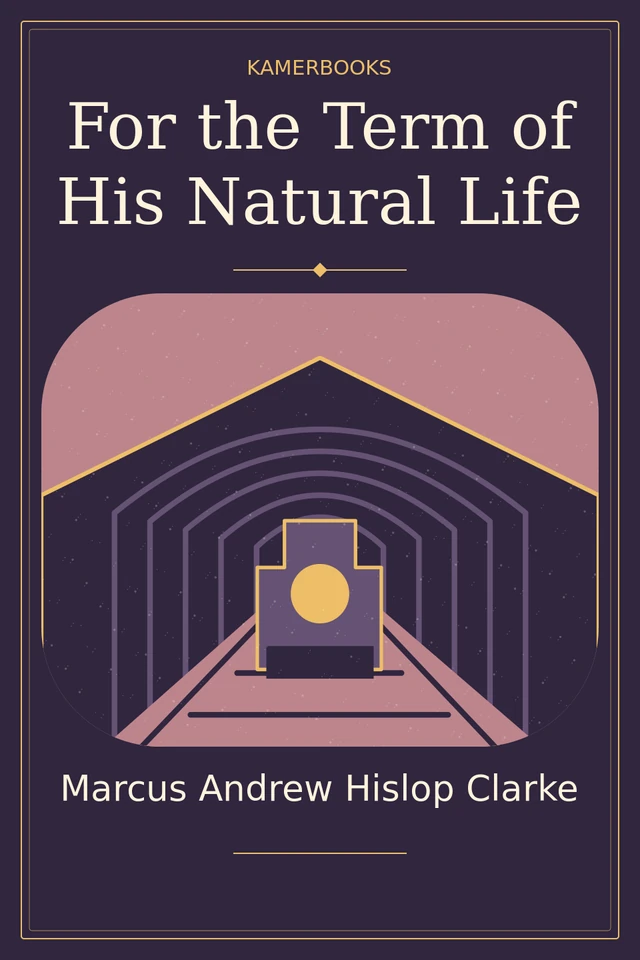
For the Term of his Natural Life, written by Marcus Clarke, was published in the Australian Journal between 1870 and 1872 (as His Natural Life), appearing as a novel in 1874. It is the best known novelisation of life as a convict in early Australian history. Described as a "ripping yarn", and at times relying on seemingly implausible coincidences, the story follows the fortunes of Rufus Dawes, a young man transported for a murder which he did not commit. The harsh and inhumane treatment meted out to the convicts, some of whom were transported for relatively minor crimes, is clearly conveyed. The conditions experienced by the convicts are graphically described. The novel was based on research by the author as well as a visit to the penal settlement of Port Arthur, Tasmania (Wikipedia).
The story follows Rufus Dawes, a young man transported for a murder which he did not commit. The harsh and inhumane treatment meted out to the convicts, some of whom were transported for relatively minor crimes, is clearly conveyed.
The novel was based on research by the author as well as a visit to the penal settlement of Port Arthur, Tasmania, providing a graphic description of the conditions experienced by the convicts.
The novel graphically describes the harsh conditions and inhumane treatment of convicts in early Australian history.
The story highlights the case of Rufus Dawes, wrongly transported for a murder he did not commit.
The novel was based on research and a visit to the penal settlement of Port Arthur, Tasmania.
Clarke aimed to convey the harsh realities of convict life, shedding light on relatively minor crimes that led to transportation.
For the Term of His Natural Life is considered a classic and a 'ripping yarn' of Australian literature.
Marcus Andrew Hislop Clarke wrote the novel.
The novel was published in the Australian Journal between 1870 and 1872 and as a book in 1874.
The novel was based on research by the author and a visit to the penal settlement of Port Arthur, Tasmania.
The story follows Rufus Dawes, a young man transported for a murder he did not commit, highlighting the harsh conditions and injustices faced by convicts.
Yes, it is considered a classic of Australian literature and a 'ripping yarn'.
Topics
Sign in to track this book as Want to Read, Reading, or Read.Sign in

Similar book

Similar book
Similar book

Similar book

Similar book

Similar book

Similar book

Similar book
Reader reviews
Sign in after purchasing this book from KamerBooks to leave a verified review. Sign in
No verified reviews yet. Purchased readers will be able to leave the first one.