Read & Listen Bundle
Ebook + Audiobook together · Save 17%
$4.99 USD $5.98 USD
Best value: switch between browser reading and chaptered audiobook listening in one KamerBooks library.

Fiction
Ebook + Audiobook together · Save 17%
Best value: switch between browser reading and chaptered audiobook listening in one KamerBooks library.
Instant delivery & trusted checkout: Pay with MTN Mobile Money or Orange Money (XAF), or PayPal & Card (USD). Every paid digital edition is backed by our 7-day satisfaction guarantee.
Displayed prices in USD are estimates when converted. Checkout shows the exact charge amount and currency before you pay.
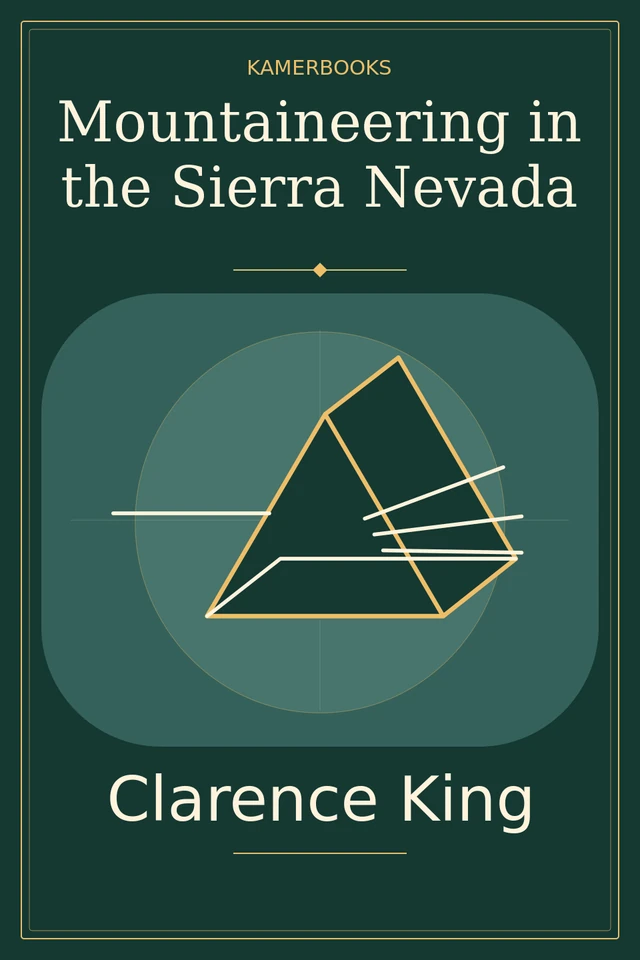
"Mountaineering in the Sierra Nevada" is a memoir by Clarence King of his adventures and work with the California Geological Survey. King later led a major survey along the 40th Parallel in the American West and then was appointed the first director of the new U.S. Geological Survey. King's 1872 "Mountaineering in the Sierra Nevada" exhibits a modern sense of timing and insight, and his accounts of hand-and-foot rock climbing seem as fresh as last week's blog post. He was part of the Victorian wave of mountain-climbing that first scaled the highest world peaks in the mid-19th century and, as a scientist, was part of a similar wave of new theories and discoveries: Darwinian evolution, glaciers, volcanism, erosion, earthquakes, topographical techniques, and human ecology. California had just passed through the Gold Rush years, and further survey of the Sierra Nevada was desired to extend knowledge of California economic geography. While listening to this historic book, please consult a supplemental web resource at which provides 19th century references, photographs of Clarence King and the Sierras, geologic definitions, and links.
Clarence King's 'Mountaineering in the Sierra Nevada' is a memoir of his adventures with the California Geological Survey. The book, published in 1872, showcases King's experiences and scientific discoveries in the Sierra Nevada mountains during the Victorian era of mountain-climbing and new geological theories.
King's work was part of a larger effort to survey the American West, following the Gold Rush years in California. His findings contributed to a greater understanding of California's economic geography and the Sierra Nevada's geological features.
King's work significantly advanced the field of geology, particularly in the areas of topographical techniques, glaciers, volcanism, erosion, and earthquakes.
King's accounts of hand-and-foot rock climbing in 'Mountaineering in the Sierra Nevada' remain remarkably fresh and insightful, even by contemporary standards.
The book provides a unique window into the Victorian era of mountain-climbing and scientific discovery, set against the backdrop of California's post-Gold Rush era.
King's work with the California Geological Survey led to his appointment as the first director of the U.S. Geological Survey and a major survey along the 40th Parallel in the American West.
King's writing reflects an interdisciplinary approach, combining insights from geology, ecology, and exploration to create a rich and nuanced portrait of the Sierra Nevada.
The book was published in 1872.
King was part of the California Geological Survey, contributing to its work and later becoming the first director of the U.S. Geological Survey.
During King's time, significant discoveries were being made in areas such as Darwinian evolution, glaciers, volcanism, erosion, earthquakes, and topographical techniques.
King's accounts of hand-and-foot rock climbing remain remarkably fresh and insightful, even by contemporary standards, showcasing his modern sense of timing and insight.
A supplemental web resource provides 19th-century references, photographs of Clarence King and the Sierras, geologic definitions, and links for further learning.
Topics
Sign in to track this book as Want to Read, Reading, or Read.Sign in

Similar book

Similar book
Similar book

Similar book

Similar book

Similar book

Similar book

Similar book
Reader reviews
Sign in after purchasing this book from KamerBooks to leave a verified review. Sign in
No verified reviews yet. Purchased readers will be able to leave the first one.