Read & Listen Bundle
Ebook + Audiobook together · Save 17%
$4.99 USD $5.98 USD
Best value: switch between browser reading and chaptered audiobook listening in one KamerBooks library.

science
by Isaac Newton
Ebook + Audiobook together · Save 17%
Best value: switch between browser reading and chaptered audiobook listening in one KamerBooks library.
Instant delivery & trusted checkout: Pay with MTN Mobile Money or Orange Money (XAF), or PayPal & Card (USD). Every paid digital edition is backed by our 7-day satisfaction guarantee.
Displayed prices in USD are estimates when converted. Checkout shows the exact charge amount and currency before you pay.
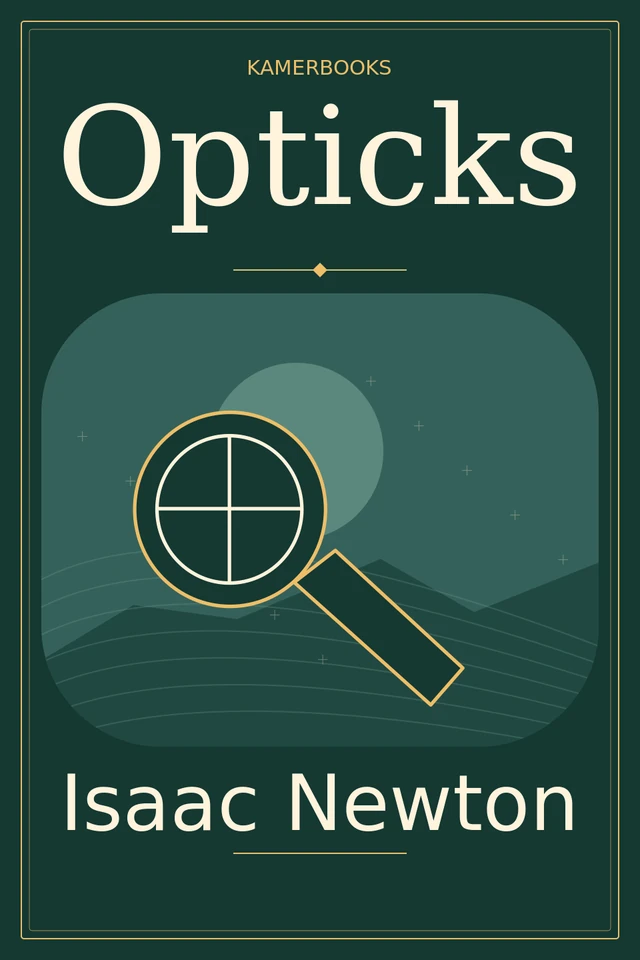
The famous physicist Sir Isaac Newton lectured on optics from 1670 - 1672. He worked on the refraction of light into colored beams using prisms and discovered chromatic aberration. He also postulated the corpuscular form of light and an ether to transmit forces between the corpuscles. His "Opticks", first published 1704 contains his postulates about the topic. This is the fourth edition in English, from 1730, which Newton corrected from the third edition before his death.
Sir Isaac Newton lectured on optics from 1670 to 1672, exploring the refraction of light into colored beams using prisms and discovering chromatic aberration. These experiments led to significant insights into the nature of light.
Newton's work on optics culminated in his seminal book, Opticks, first published in 1704. The book contains his postulates about the topic, including the corpuscular form of light and an ether to transmit forces between the corpuscles.
Newton's experiments with prisms led to the discovery of chromatic aberration and insights into the refraction of light.
Newton postulated that light consists of corpuscles, which was a fundamental concept in his work on optics.
Newton proposed the existence of an ether to transmit forces between the corpuscles of light.
Opticks was first published in 1704 and later corrected by Newton for the fourth English edition in 1730.
Newton's work on optics, as presented in Opticks, laid the foundation for future research in the field.
Opticks was first published in 1704.
The fourth English edition of Opticks, published in 1730, was corrected by Newton from the third edition before his death.
Chromatic aberration is the phenomenon of light being refracted into colored beams, which Newton discovered using prisms.
The corpuscular theory of light, proposed by Newton, posits that light consists of small particles or corpuscles.
Newton proposed the existence of an ether to transmit forces between the corpuscles of light.
Topics
Sign in to track this book as Want to Read, Reading, or Read.Sign in

Similar book

Similar book

Similar book

Similar book

Similar book

Similar book
Similar book

Similar book
Reader reviews
Sign in after purchasing this book from KamerBooks to leave a verified review. Sign in
No verified reviews yet. Purchased readers will be able to leave the first one.